

Introduction:
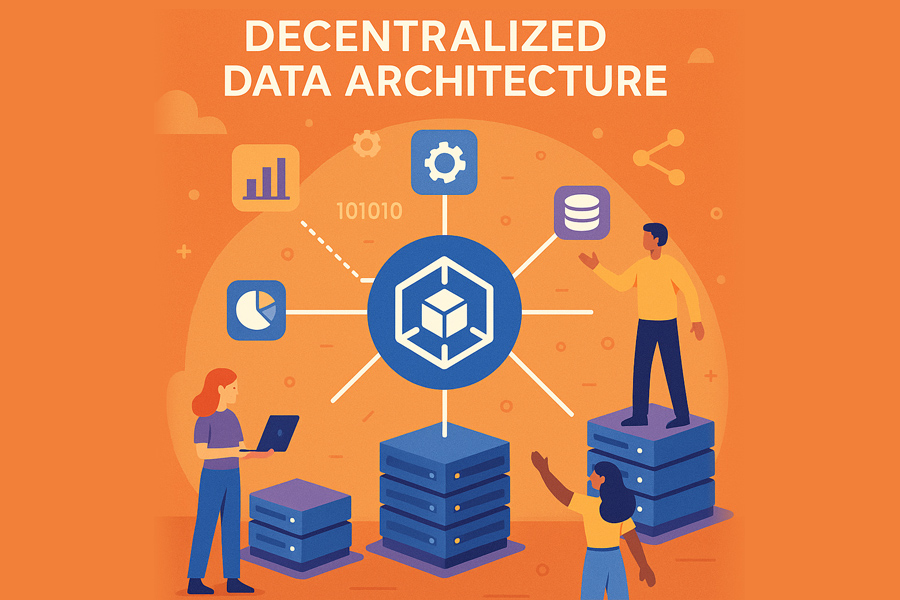
In the ever-evolving landscape of data management, traditional centralized approaches often face challenges in scalability, agility, and adaptability. Today’s data landscape demands a shift. Traditional, centralized approaches struggle to keep pace with ever-growing data volumes. The concept of Data Mesh has emerged as a groundbreaking paradigm shift, emphasizing decentralized data architecture to enable better data ownership, accessibility, and autonomy. SnapLogic, a leading integration platform, plays a crucial role in harnessing the power of Data Mesh, facilitating seamless data sharing and collaboration across the enterprise.
Understanding Data Mesh:
Data Mesh, introduced by Zhamak Dehghani, emphasizes the need for a paradigm shift from centralized data architectures to decentralized, domain-oriented data products. The key principles of Data Mesh include domain-driven decentralized data ownership, data as a product, self-serve data infrastructure as a platform, and federated computational governance.
SnapLogic’s Role in Data Mesh:
Decentralized Data Integration:
SnapLogic’s integration platform allows organizations to decentralize their data integration efforts. By providing a unified platform for building data pipelines and workflows, SnapLogic empowers different business units or domains to manage their data integrations independently. This decentralized approach aligns with the Data Mesh principles of domain-oriented data ownership.
Domain-Oriented Data Products:
SnapLogic supports the creation of domain-specific data products or pipelines. Each business unit or domain can design, build, and manage its data integrations using SnapLogic’s visual interface. This allows for the creation of self-contained, domain-specific data assets, aligning with the Data Mesh principle of treating data as a product.
Data Collaboration and Accessibility:
SnapLogic facilitates seamless data collaboration between different domains or business units. With the platform’s ease of use and visual interface, teams can share data assets, collaborate on integrations, and ensure accessibility to relevant data without compromising data ownership. This supports the concept of federated computational governance within Data Mesh.
Self-Serve Data Infrastructure:
SnapLogic provides a self-serve data infrastructure that empowers various teams to design, deploy, and manage their data integrations without heavy reliance on centralized IT. This aligns with the Data Mesh principle of creating a self-serve data infrastructure as a platform for different domains.
Federated Computational Governance:
SnapLogic’s platform includes robust governance features, ensuring compliance, security, and monitoring of data integrations. It allows organizations to implement federated computational governance across different domains, addressing the Data Mesh requirement of distributed and collaborative governance.
Benefits of Combining SnapLogic with Data Mesh:
Scalability and Agility:
The combination of SnapLogic and Data Mesh provides organizations with a scalable and agile data architecture. Each domain can independently scale its data integrations, enhancing overall scalability, and adapt quickly to changing business requirements.
Improved Data Ownership:
SnapLogic’s decentralized approach enhances data ownership by enabling different domains or business units to manage their data integrations independently. This ensures that the teams closest to the data have the autonomy and responsibility for its management.
Collaborative Data Culture:
The collaborative features of SnapLogic promote a data-driven and collaborative culture within the organization. Teams can easily share and collaborate on data assets, fostering a culture where data is seen as a shared responsibility across domains.
Reduced Time-to-Value:
The visual, low-code nature of SnapLogic accelerates the development of data integrations. Combined with the decentralized approach of Data Mesh, organizations can significantly reduce time-to-value for their data initiatives by empowering different domains to act independently.
Conclusion:
SnapLogic, with its robust integration capabilities, aligns seamlessly with the principles of Data Mesh. By embracing decentralized data architecture, organizations can leverage SnapLogic to empower different domains, enhance data ownership, and foster a collaborative and agile data culture. This combination not only addresses the challenges of traditional centralized approaches but also positions organizations to unlock the full potential of their data in the era of Data Mesh.